Staff every project
without the guesswork
See each architect's committed hours across all active projects in one view. Spot who's stretched thin and who has room before you hand off the next phase, not after the overtime.
Free for 30 days · no credit card
Overload is an overrun
you haven't logged yet
In a five-person studio, staffing by gut works: everyone can see everyone. Somewhere past ten people it silently breaks. The principal still assigns work from a mental picture of who's busy, but the picture updates slower than the projects do, and the gap lands on the same shoulders every time: the person who never says no.
The costs surface later and wear disguises. An overloaded architect logs overtime, and the phase overruns its fee. Or the hours get quietly compressed, and the quality debt comes due during construction documents. Either way, the staffing mistake becomes a money problem months after it was made, long after anyone connects the two.
Planning in FeeLens is the same fee data pointed forward: phases carry hour budgets, people carry commitments, and the collision between them is visible before you hand off the next phase instead of after it.
The plan assembles itself
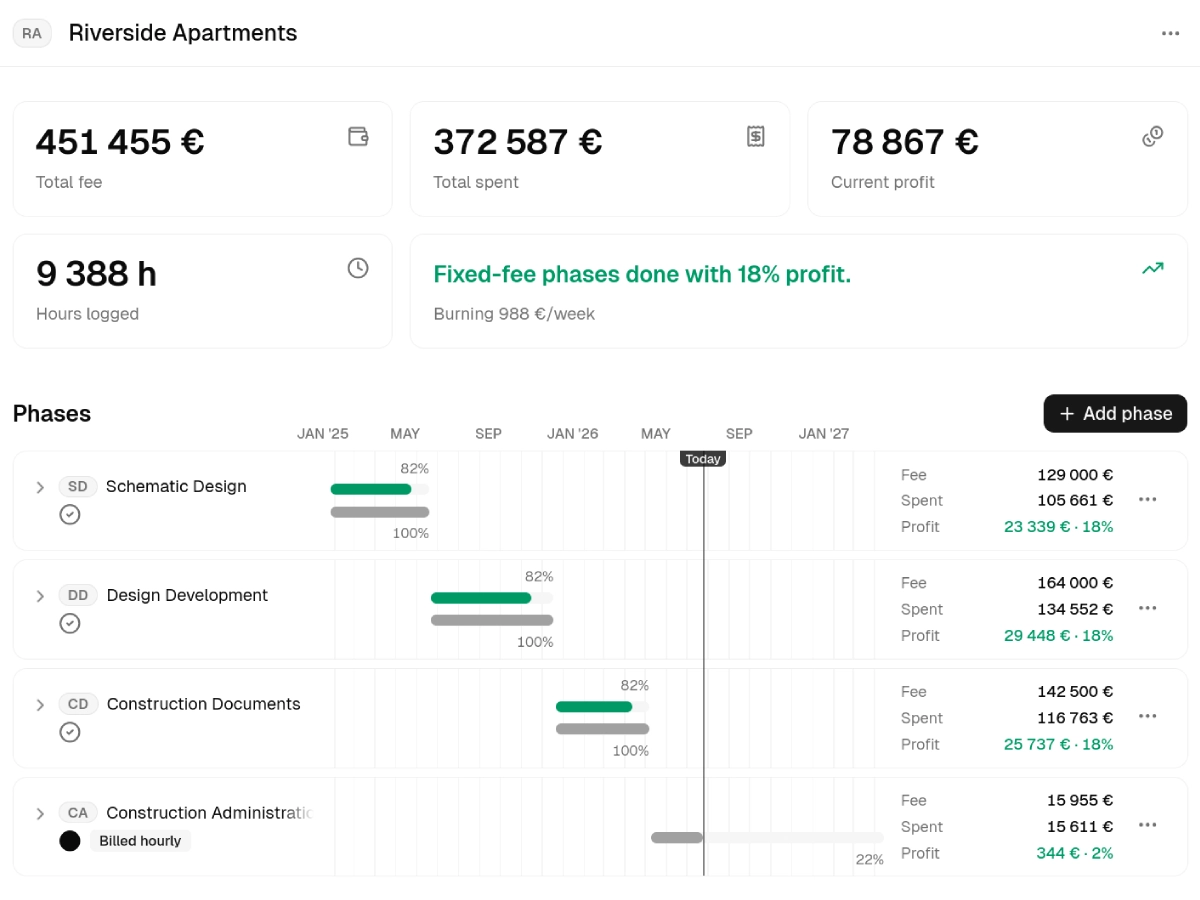
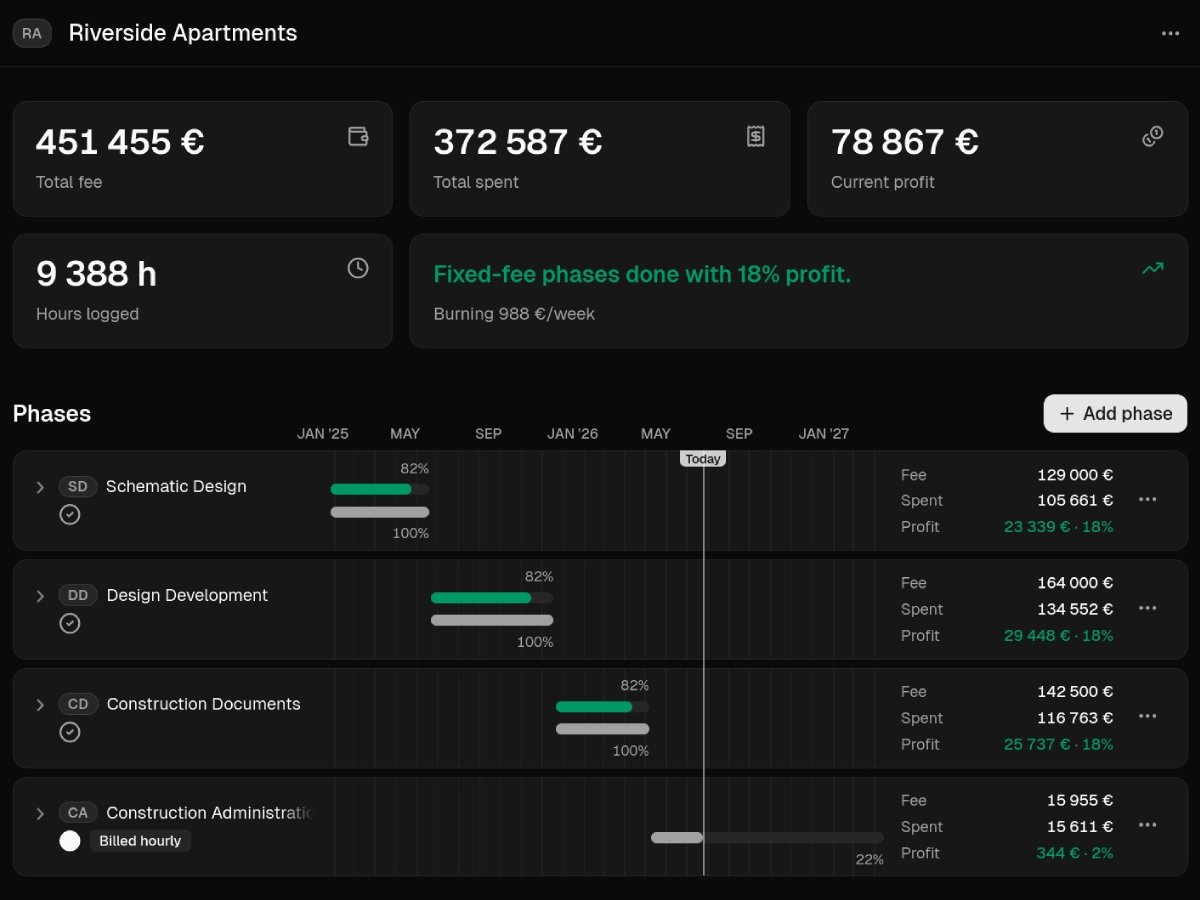
Phases carry hour budgets
Each phase's share of the fee translates into hours at your rates, so “concept design” isn't just a deadline, it's a quantity of work.
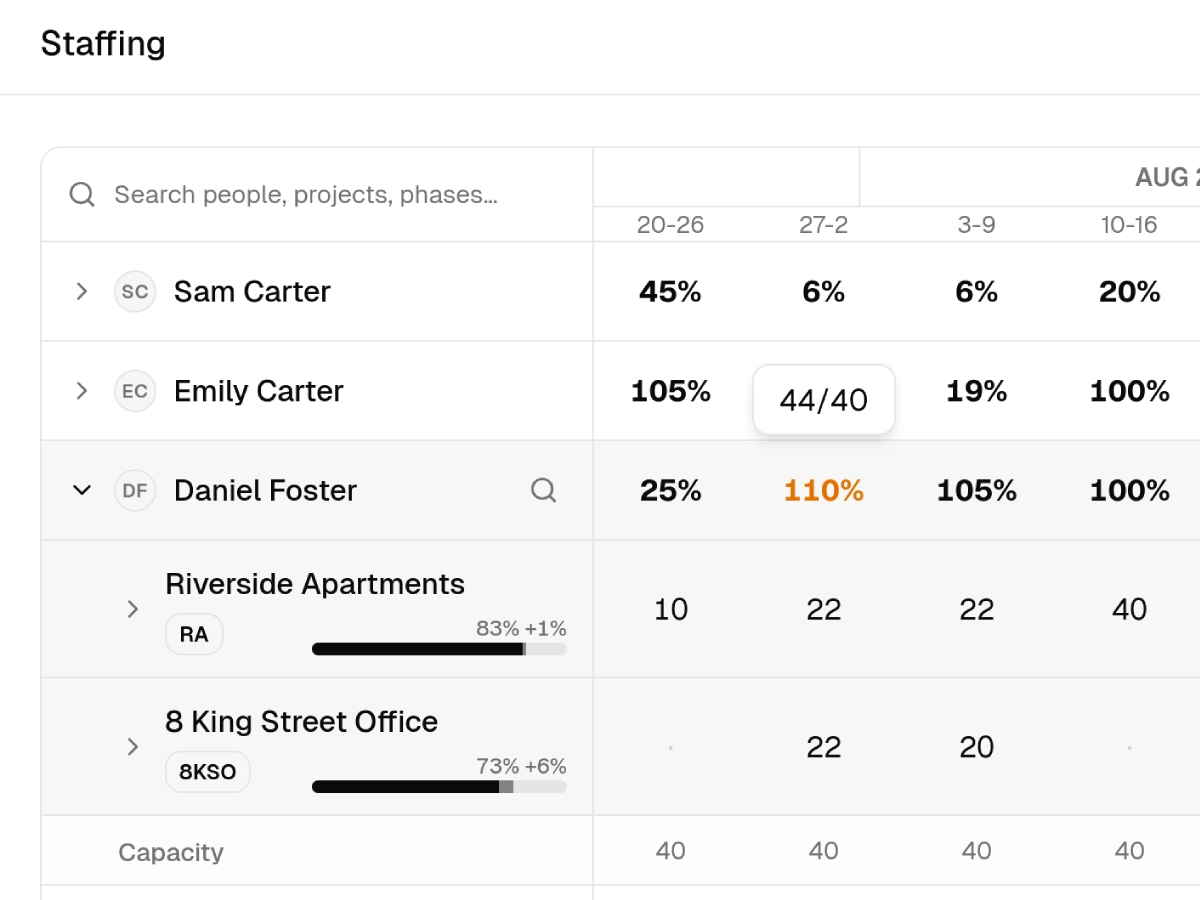
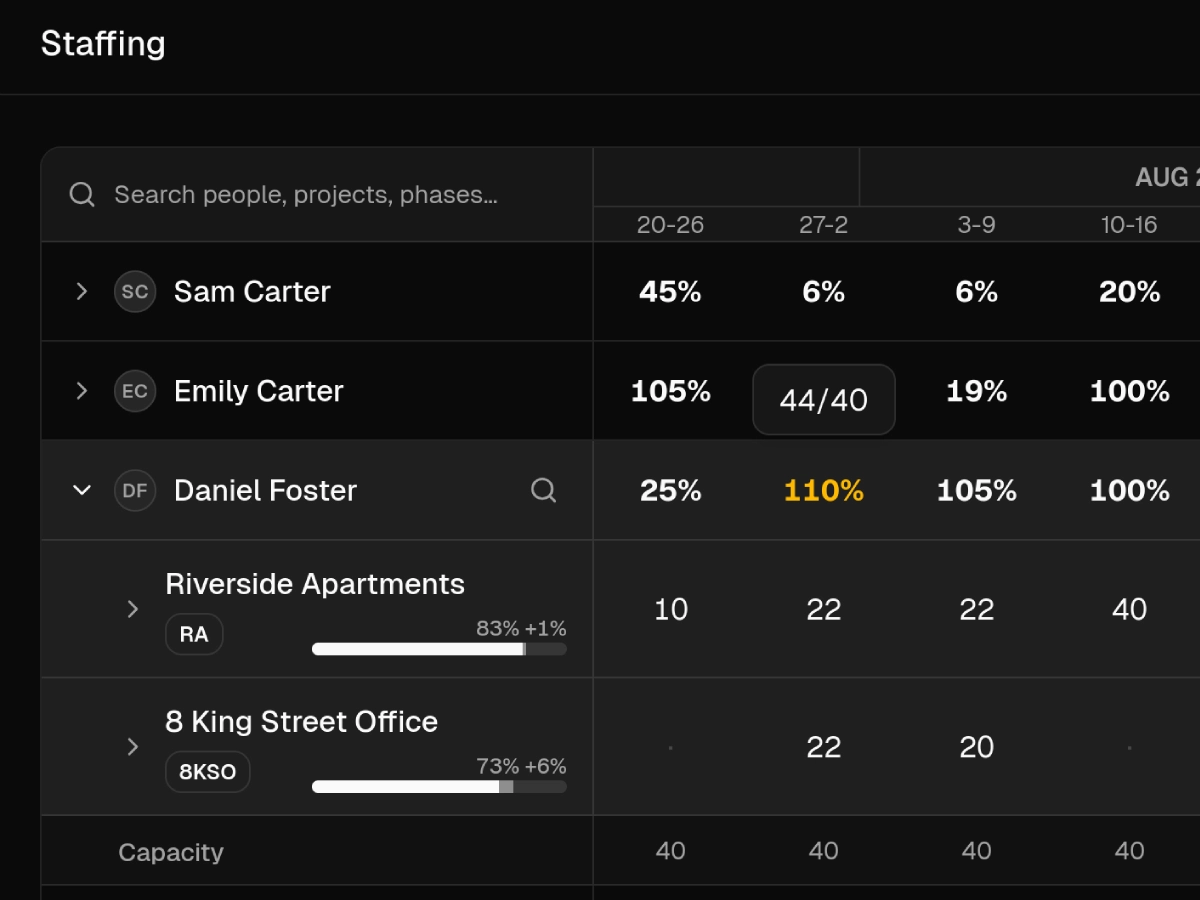
People carry commitments
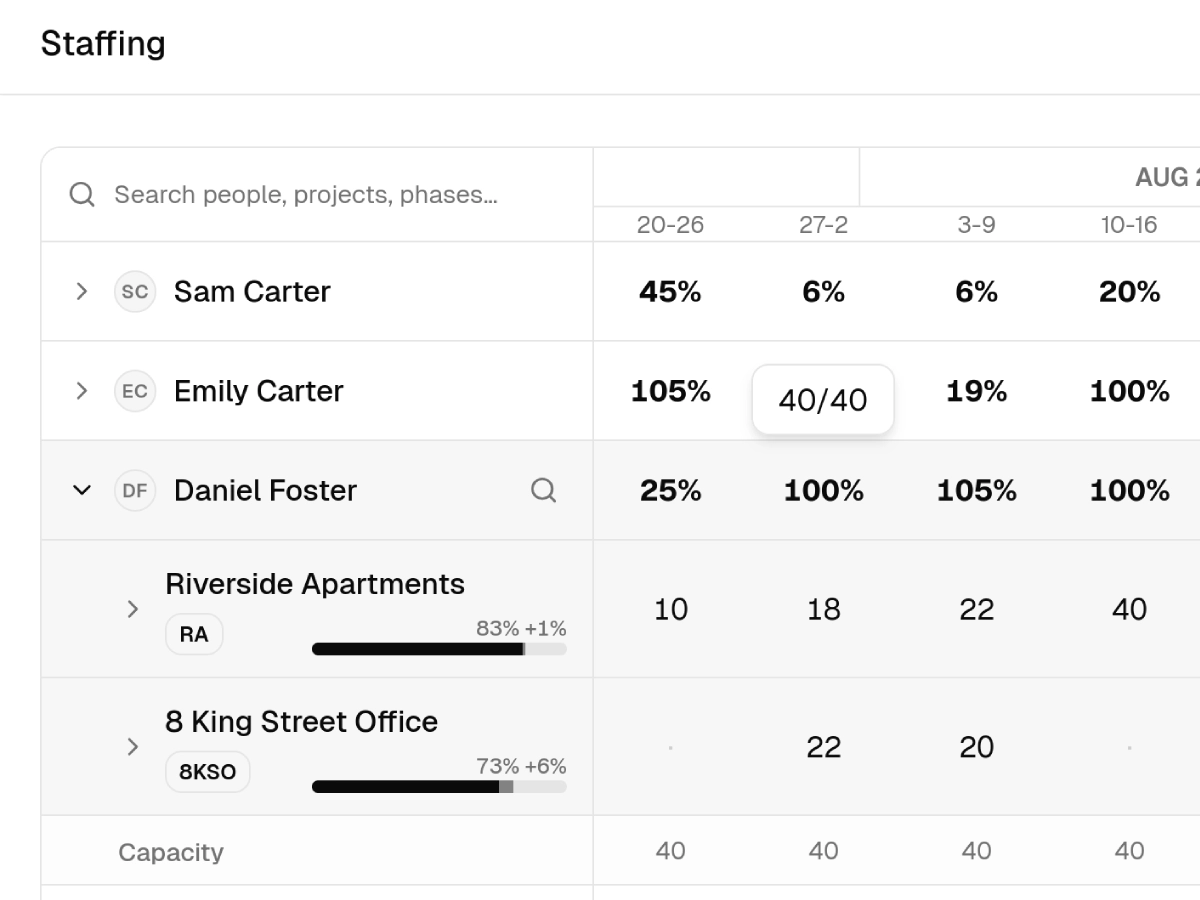
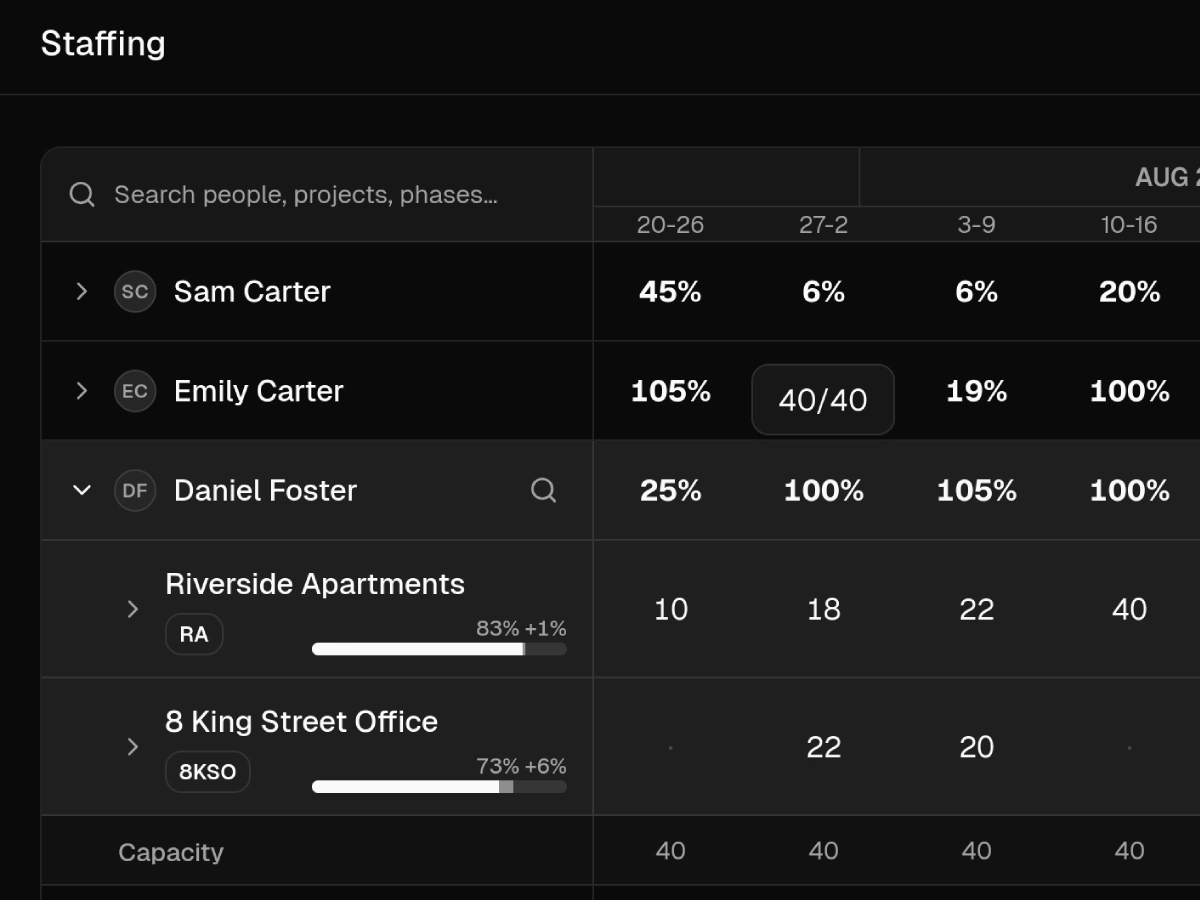
Assign architects to phases and each person's week fills up in one view: every project they're on, summed honestly.
The gaps show themselves
Pile-ups and idle weeks stand out at a glance. Move an assignment and both the person's load and the phase's coverage update instantly.
One view of
everyone's plate
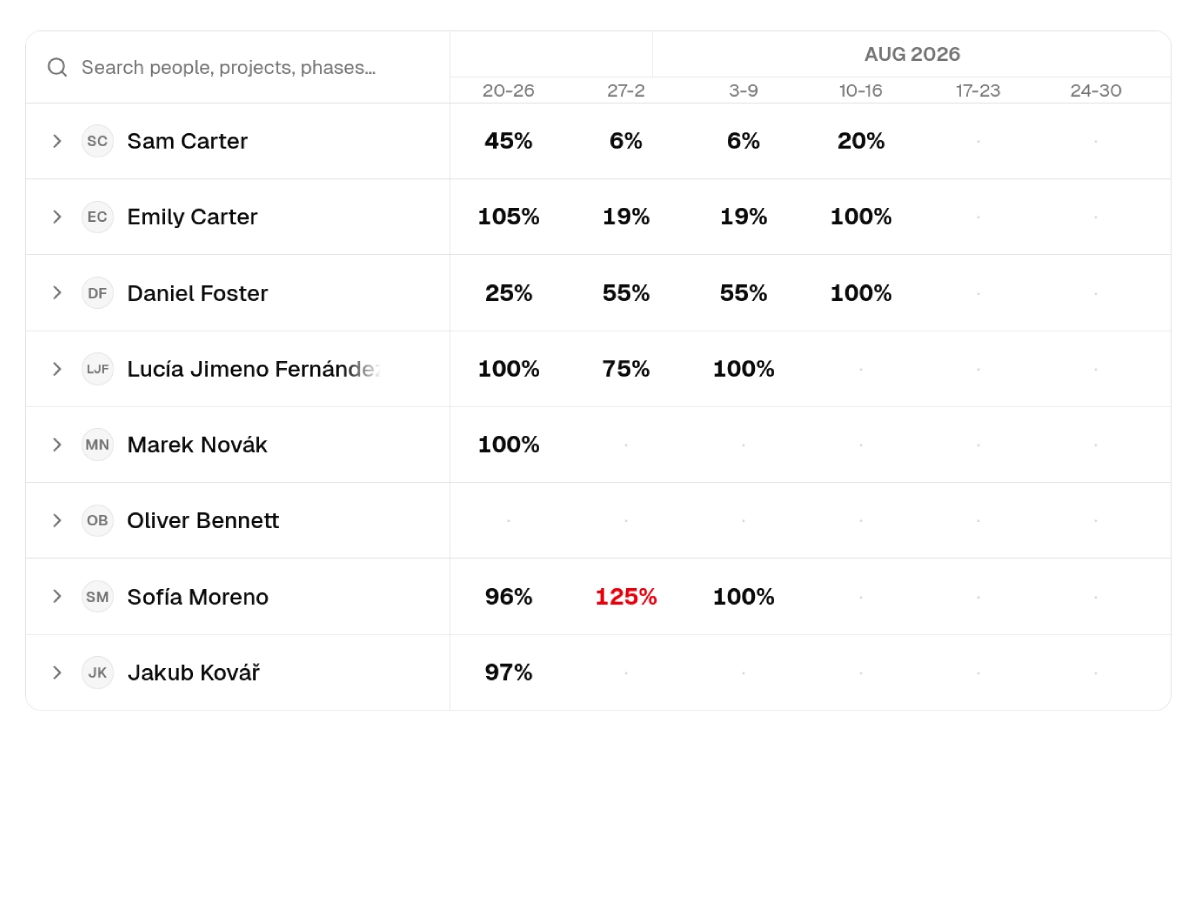
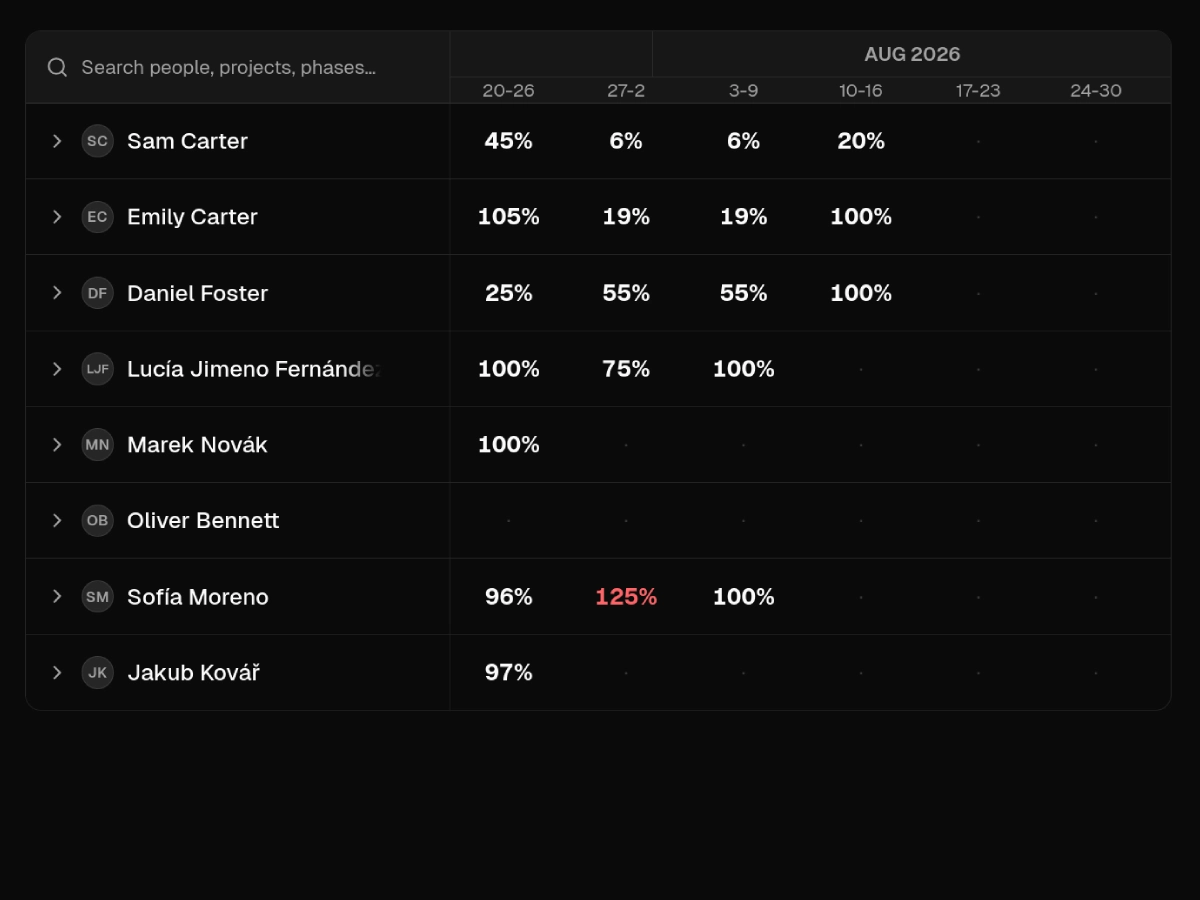
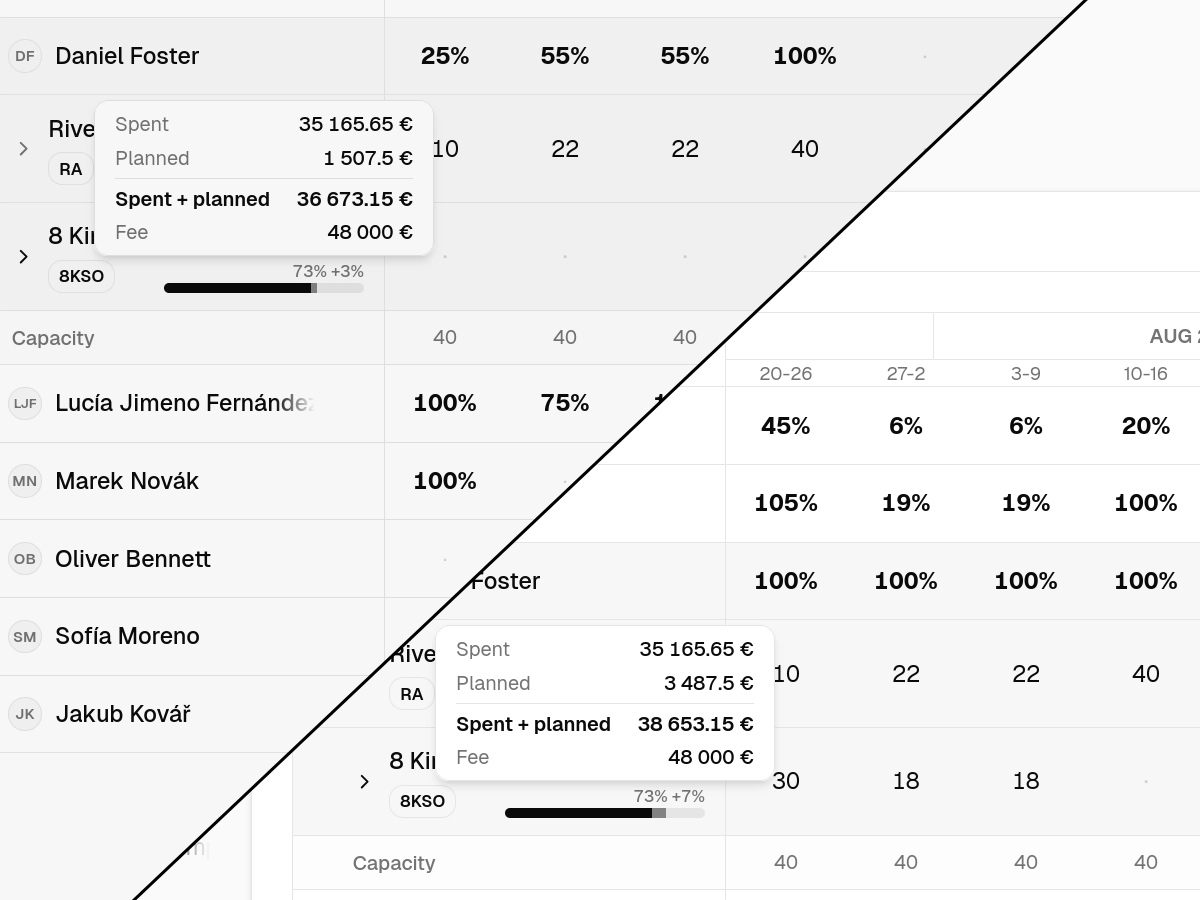
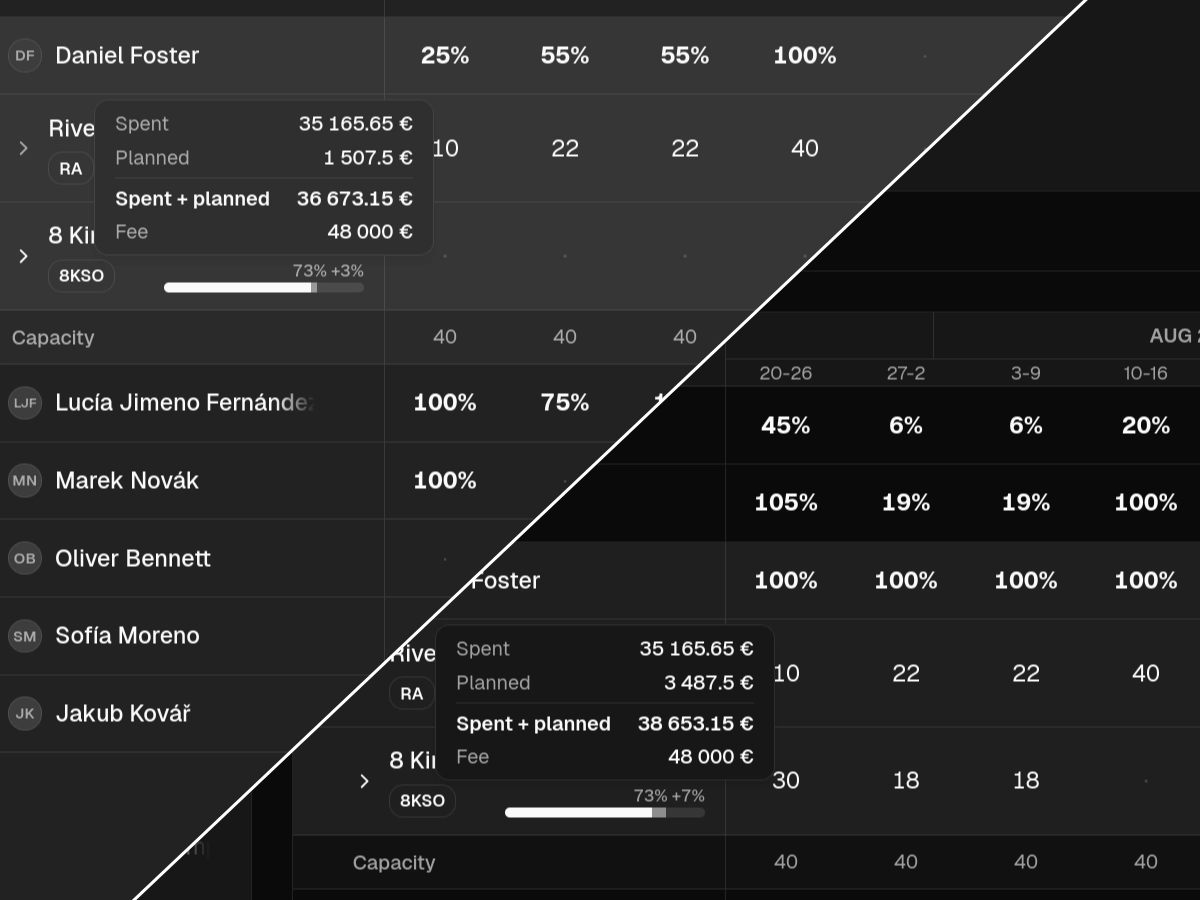
The staffing view is the studio's week laid flat: every architect, every active project, committed hours summed per person. Not a Gantt chart with forty dependencies, but a single honest answer to “who is actually free?”
That answer changes decisions at the moment they're made. The next phase goes to the person with room instead of the person who came to mind first, and the studio's quiet habit of overloading its most dependable people finally becomes visible enough to stop.
Staffing that
knows the fee
Standalone resource planners treat an hour as an hour. FeeLens knows a senior's hour and a junior's hour burn the fee at different rates, so staffing a phase shows its money consequence, not just its calendar one. Put the expensive hands on the competition, the developing ones on the permit set, and see what each choice does to the phase budget before committing.
It's the same connection working forward that the budget alarms work backward: plan the hours against the fee, then watch the real hours confirm or correct the plan.
And when a phase does run over, this is the view you come back to. The fee for the phases still ahead is the room you have to recover in. You replan those hours here, shifting the coming weeks to whoever has capacity, so one project that's already over doesn't take the rest of the fee down with it.
Why FeeLens exists
At the studio where I worked, staffing had one rule: when a deadline got close, everyone got thrown at the project. Nobody counted those hours and counting felt beside the point, because delivering late meant a reduced fee or none at all. So we always delivered. What we never saw was the bill for the rescue: the projects the extra people were pulled from, and a fee that had quietly been spent twice.
FeeLens won't remove deadline crunches. It shows who has room before the panic and what this scramble is costing while it happens.

Mario Valkovic
Creator of FeeLens
Questions,
answered
- Is this a full resource-management suite?
- Deliberately not. Big resource tools want skill matrices, utilization targets, and a planner to run them. FeeLens answers the one staffing question a small studio actually asks each week (who has room for the next phase?), using the hours and budgets it already tracks.
- Do we have to estimate hours for every phase up front?
- It helps, but rough is fine. Your usual phase percentages are a good enough starting point, and the plan sharpens as logged hours show how your estimates behave. A staffing view built on imperfect numbers still beats one built on memory.
- How does planning handle part-timers and contractors?
- Each person carries their own capacity and hourly rate, so a three-day-a-week architect or an external consultant shows up honestly in both the workload view and the fee math.
- How is this connected to the budget alarms?
- Directly: it's the same data. Staffing decides who spends the phase's hours, monitoring watches those hours burn the fee. Overloading a person and overrunning a budget are usually the same mistake seen from two sides, so FeeLens shows them from both.